Explorer 1 and the Van Allen Story
On February 1st, 1958 at 03:48 UTC (January 31st at 22:48 EST), the first Juno booster launched Explorer 1 into low earth orbit. It was the first satellite to be successfully launched by the United States, and the third artificial satellite to reach orbit, following Sputnik 1 and 2 in 1957.
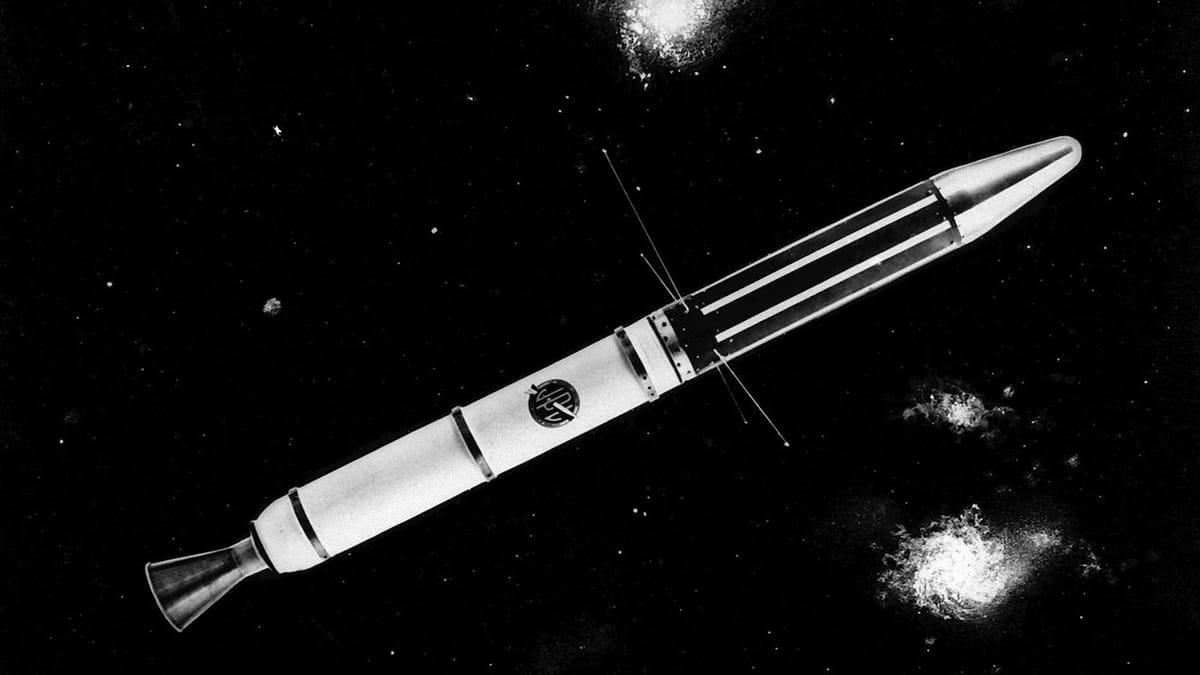
On February 1st, 1958 at 03:48 UTC (January 31st at 22:48 EST), the first Juno booster launched Explorer 1 into low earth orbit. It was the first satellite to be successfully launched by the United States, and the third artificial satellite to reach orbit, following Sputnik 1 and 2 in 1957. Launched from the Army Ballistic Missile Agency’s (ABMA) Cape Canaveral Missile Annex in Florida, now known as Launch Complex 26, the satellite played a pivotal role in the discovery of the Van Allen radiation belts. Explorer 1 marked the beginning of the Explorer series, a programme that would eventually include over 80 scientific satellites. Although sometimes overlooked in the history of space, it helped shape the US space program to what it eventually became.

In 1954 The US Navy and US Army had a joint project known as Project Orbiter, which aimed to put a satellite into orbit during 1957. It was planned to be launched on a Redstone missile, but the Eisenhower administration rejected the idea in 1955 in favour of the Navy’s project Vanguard. Vanguard was an attempt to use a more civilian oriented booster, rather than a launch vehicle directly derived from military missile technology. It failed dramatically in 1957 when the Vanguard TV3 exploded shortly after liftoff on live TV, less than a month after the launch of Sputnik 2. This increased public concern in the United States about its position in the space race. This led to the Army getting a chance to launch the first successful American satellite.

In a race against time to get Explorer 1 ready, the Army Ballistic Missile Agency had been creating reentry vehicles for ballistic missiles, but had also maintained ambitions to launch a satellite. At the same time Physicist James Van Allen of Iowa State University, was developing the mission's scientific instument payload.Meanwhile, JPL director William H. Pickering was providing the satellite itself, while Wernher von Braun led the rocket team responsible for developing the launch system. After the Vanguard failure, the JPL-ABMA group was given permission to use a Jupiter-C reentry test vehicle with the modified launcher renamed Juno, and adapt it to launch the satellite. The Jupiter IRBM reentry nose cone had already been flight tested, speeding up the process. It took the team a total of 84 days to modify the rocket and build Explorer 1.

The satellite itself, designed and built by JPL, the Jet Propulsion Laboratory operated by the California Institute of Technology, under the direction of William H. Pickering was the second satellite to carry a scientific instrument payload into orbit, with Sputnik 2 being the first. Shaped much like a rocket itself, it weighed 13.97kg (30.8lb) of which 8.3kg (18.3lb) was the instrumentation. The instrumentation sat at the front of the satellite, with the rear containing a small rocket motor acting as the fourth stage, this section did not detach. The data was transmitted to the ground by two radio systems with different antenna. A 60-milliwatt transmitter fed a dipole antenna and two fiberglass slot antennas in the body of the satellite, operating at 108.3MHz. A second system used four flexible whips acting as a turnstile antenna, fed by a 10-milliwatt transmitter operating at 108.00MHz.

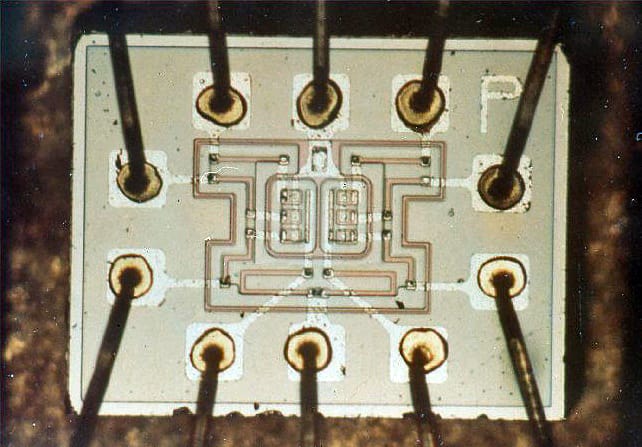
With a limited development timeframe, little space available and strict weight restrictions, the instrumentation was designed to be simple, and highly reliable. The scientific payload included a cosmic-ray detector developed by Van Allen’s team, whose electronics used germanium and silicon transistors in the electronics. twenty nine transistors were used in the Explorer 1 payload instrumentation, with others being used in the Army’s micrometeorite amplifier. The power was provided by mercury batteries, which weighed roughly 40% of the total payload weight. The outside of the instrumentation section was made of sandblasted stainless steel with white and black stripes. There were many potential colour schemes, which is why early models, illustrations and photographs showing different configurations. The final scheme was decided following studies of the spacecraft’s exposure to sunlight and shadow, taking into account firing time, trajectory, orbit and inclination. The stripes are also seen on many of the early rockets associated with Wernher von Braun.

The instrument was originally intended to include a tape recorder on board, but it was not completed in time to be installed aboard the spacecraft. This meant that all the data received was transmitted in real time via the onboard radio systems. Furthermore, because there were no downrange tracking stations, receivers could only collect signals when the satellite passed overhead. This meant that they could not obtain a continuous record of the satellite’s measurements throughout its orbit. It also meant that when the rocket rose and disappeared over the horizon, they had no idea that the satellite had reached orbit. Half an hour after the launch Albert Hibbs, a JPL scientist involved in the Explorer programme’s orbital calculations, walked into the room and announced that there was a 95% chance the satellite was in orbit. In response, the major reportedly snapped: “Don’t give me any of this probability crap, Hibbs. Is the thing up there or not?”.

The instrument was the brainchild of one of Van Allens graduate students, George Ludwig. When he heard the payload was going into the Explorer 1 rather than Vanguard, he packed up his family and set off for JPL to work with the engineers there. He later recounted his experiences in an oral history link, talking about designing some of the first electronics in space. Ludwig was at JPL on launch night, waiting for the first results. From the Navy’s Vanguard Microlock receiving station the team monitored telemetry from the cosmic-ray package. The first 300 seconds were very hopeful, with a quick rise in counting rates followed by a drop to a constant 10-20 counts per second, as expected. The calculations told them when they should hear from the satellite again, but 12 minutes after the expected time, nothing was received. After a prolonged silence, Explorer 1 finally transmitted again.

Once in orbit, Explorer 1 transmitted data for 105 days. Thdeclared a success within its first month of operation. From the scientists’ perspective, the lack of data meant the results were difficult to conclude. The data was also different to the expectations, it was recording less micrometeorite activity than expected and varying amounts of cosmic radiation, and sometimes silent above 600 miles. The mystery was resolved through Explorer 3, when scientists realised that the counters were being overwhelmed by intense radiation. This helped lead to the discovery of the Van Allen radiation belts.
Although the radiation was described in dramatic terms, the belts are a natural part of Earth’s space environment. They trap energetic charged particles within Earth's magnetic field, while Earth's magnetic field and atmosphere together help shield the planet's surface from harmful radiation. The satellite batteries powered the high-power transmitter for 31 days, and after 105 days Explorer 1 sent its final signal on 23 May 1958. It remained in orbit for more than 12 years, re-entering the atmosphere over the Pacific Ocean on 31 March 1970 after approximately 58,000 orbits.
Although its active mission was brief, Explorer 1 left a lasting legacy. It demonstrated that the United States could successfully launch a scientific satellite, contributed to one of the most important discoveries of the early Space Age, and paved the way for decades of scientific exploration beyond Earth.