Charon: The Man Who Gave His Wife a Moon
On June 22nd, 1978 James Christy was trying to refine the orbit of Pluto when he noticed something odd about the images. Going straight to Robert Harrington, his supervisor at the U.S. Naval Observatory in Flagstaff, Arizona, together they concluded that they had found what we now know as Pluto’s largest moon Charon. Discovered just 6 miles away from where pluto itself was found (Lowell Observatory), discovering Charon began a journey from Pluto being a dot on a telescope to its own planetary system. With some amazing images coming from a probe NASA sent there, we have a glimpse of the edge of our solar system. The best part of the story, Charon is named after Christy’s wife.
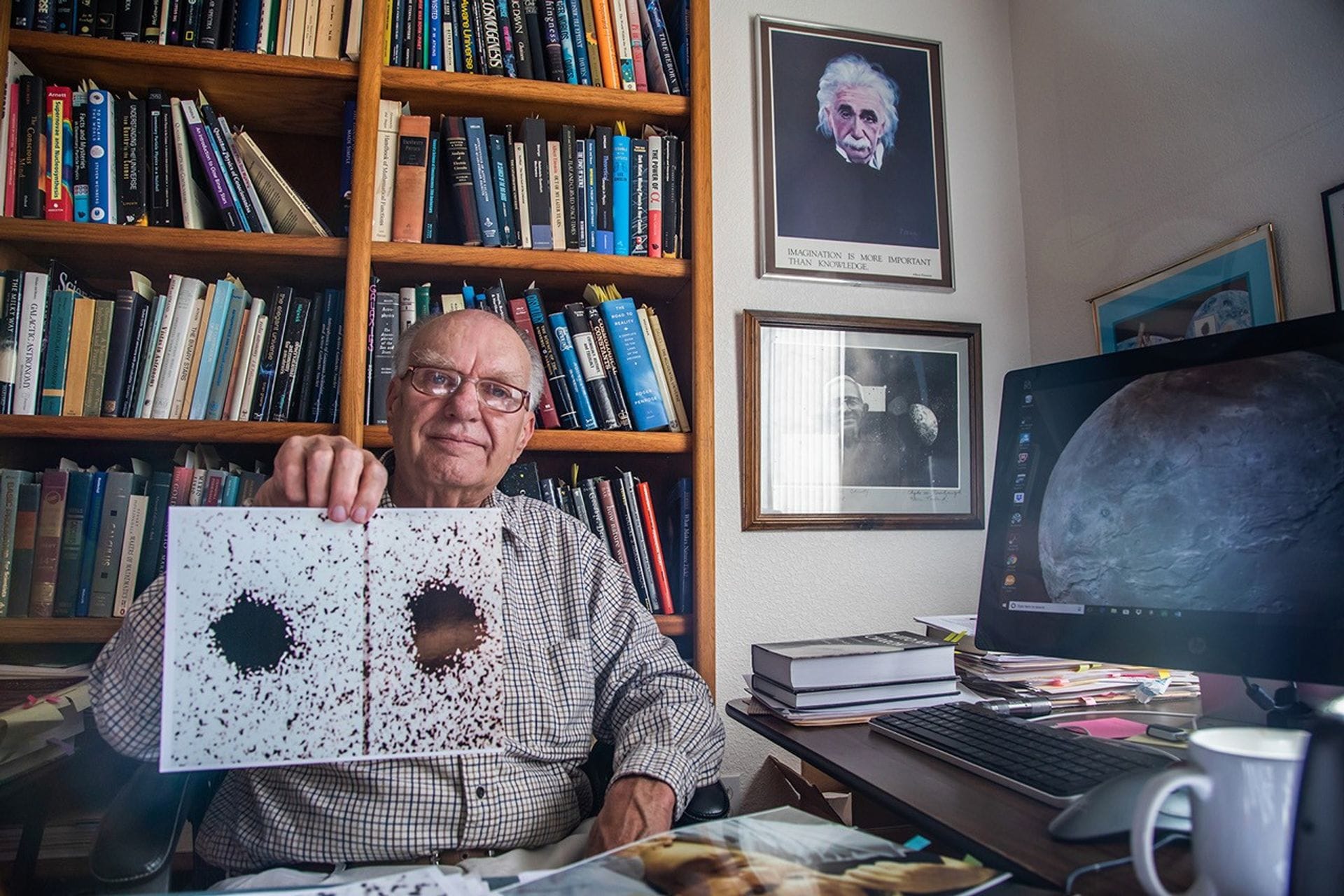
In 1930, Clyde Tombaugh discovered Pluto, and although famous in itself, there was limited study on this dot in the far reaches of the solar system. So on the fateful day James Christy asked his supervisor Bob Harrington for something to do, Harrington pulled some telescope plates of Pluto from the Naval Observatory at Flagstaff to look over. Christy looked over them for some time under a microscope and noticed some inconsistencies with the images, with the asymmetry being different between them. In simple terms he noticed a bump on the side of Pluto that seemed to move over time. Although at first he thought he might be seeing things, when he took it to Harrington he agreed with the findings.

When looking at other images of Pluto, the bump was constantly moving from one side to the other. Further examination showed the bump moved around Pluto at the same own rotational period, 6.39 days. There were two potential theories as to what it was, either Pluto had a mountain thousands of miles high (meaning Pluto was not very spherical) or it has a satellite in synchronous orbit. In the 48 years since Pluto’s discovery at Lovell Observatory in 1930, there had never been any evidence spotted that Pluto had a moon. The next steps included scouring the archives for more cases of an elongated looking Pluto.
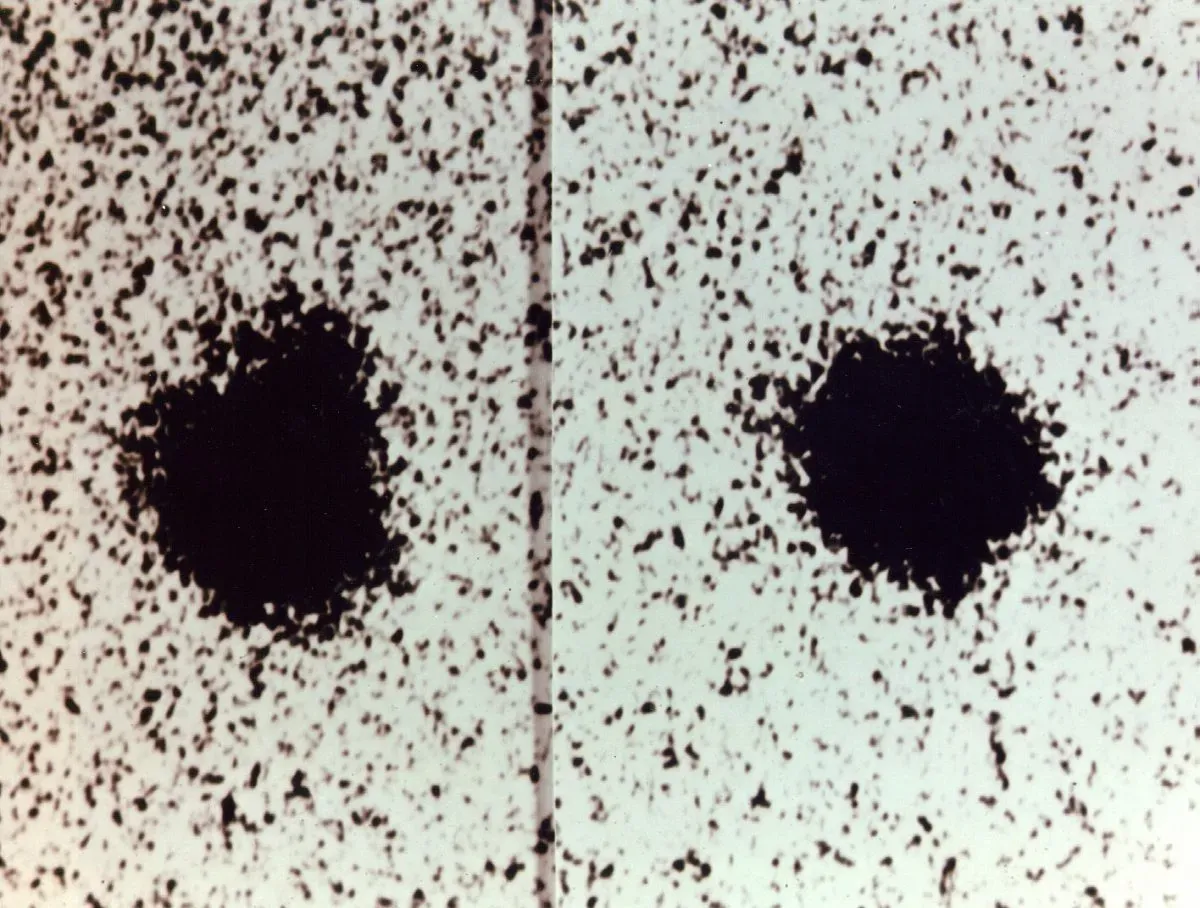
Christy measured the angle from the north where the strange elongation was. At the same time Robert Harrington calculated what the answer would be if the elongation was from a satellite. They then compared their results, and they were the same. To be sure they waited for the Observatories 61 inch telescope to make a final confirmation on the matter. On the 2nd of July 1978 new images showed an elongation exactly where they expected it to be. Five days later they announced the discovery to the world. Pluto’s first satellite had been discovered.
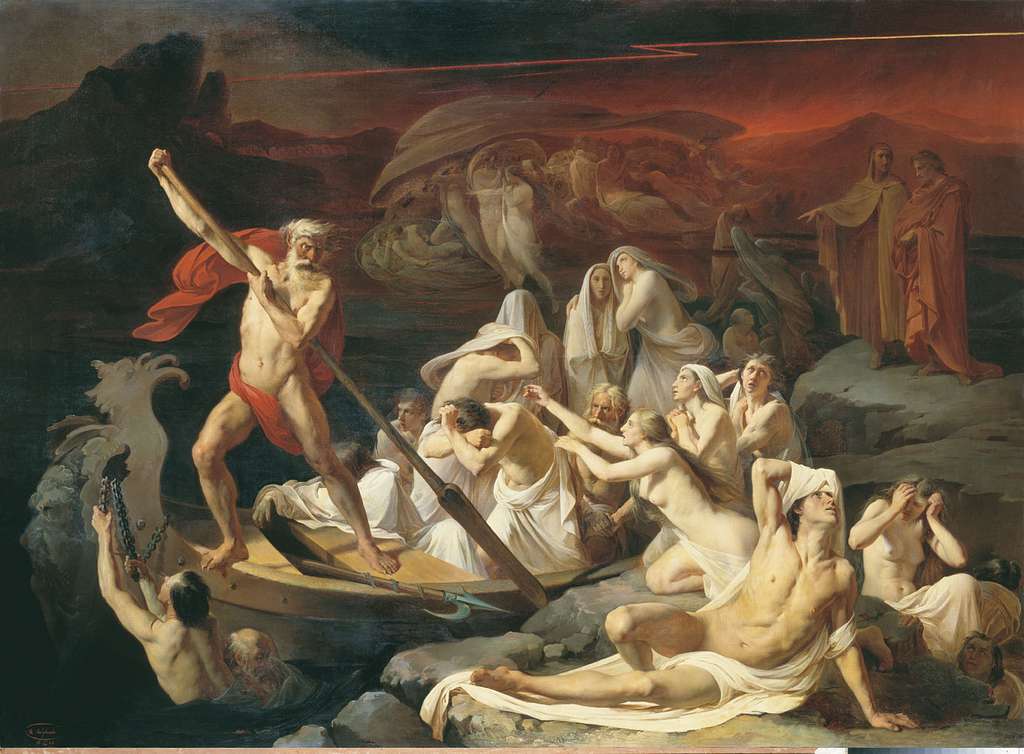
By astronomical tradition, the discoverer of an object gets the first chance to suggest a name for the object. The name does not have to be recognised by the International Astronomers Union. Christy wanted to name the moon after his wife, Charlene. To make it sound more scientific he took his nickname for her “Char” and added an “on”. The “on” was from his interest in atoms, and words like proton and neutron. He suggested the name on the June 24th, 1978. Colleagues at the observatory prefered the name Persephone, but Christy noticed that Charon was actually a real Greek mythological figure. Charon is the ferryman of the dead, associated with the god Hades. Creepily the Romans identified Hades with their god Pluto. The name was eventually adopted on January the 3rd 1986.
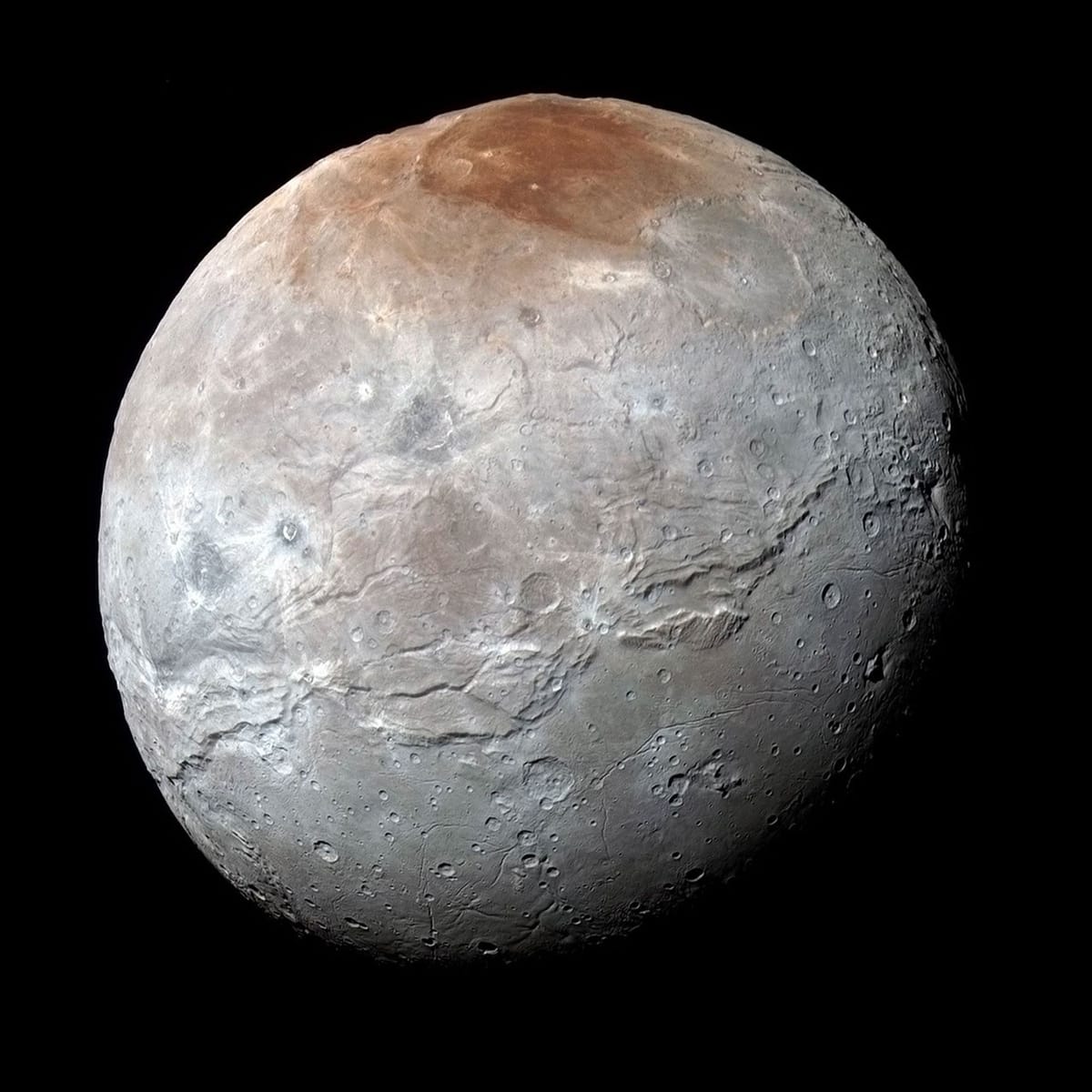
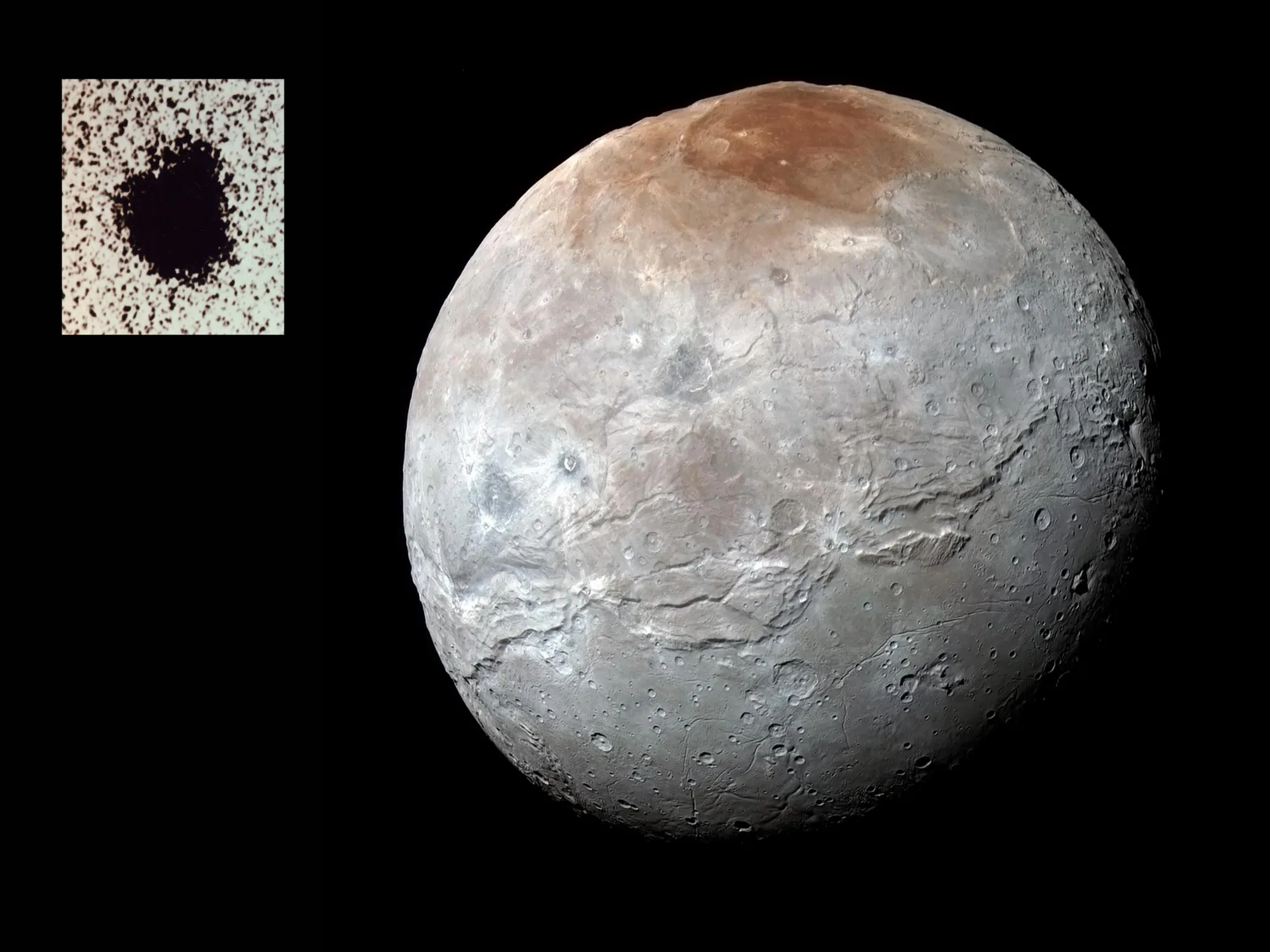
Charon is the largest moon of Pluto, and is about the size of Texas. It also makes Charon the largest moon relative to its parent planet at about 12% of the size. So big in fact that Charon and Pluto are seen as a double planet or binary planets. They have a common centre of gravity that is outside of either of them. It is believed that it was formed by some sort of giant impact, much like the Earth and the Moon. The sheer size and proximity to Pluto meant it was a good choice for a scientific mission to take a closer look at the system. The mission, New Horizons was launched in 2006, with a primary mission to perform a flyby study of the Pluto system.
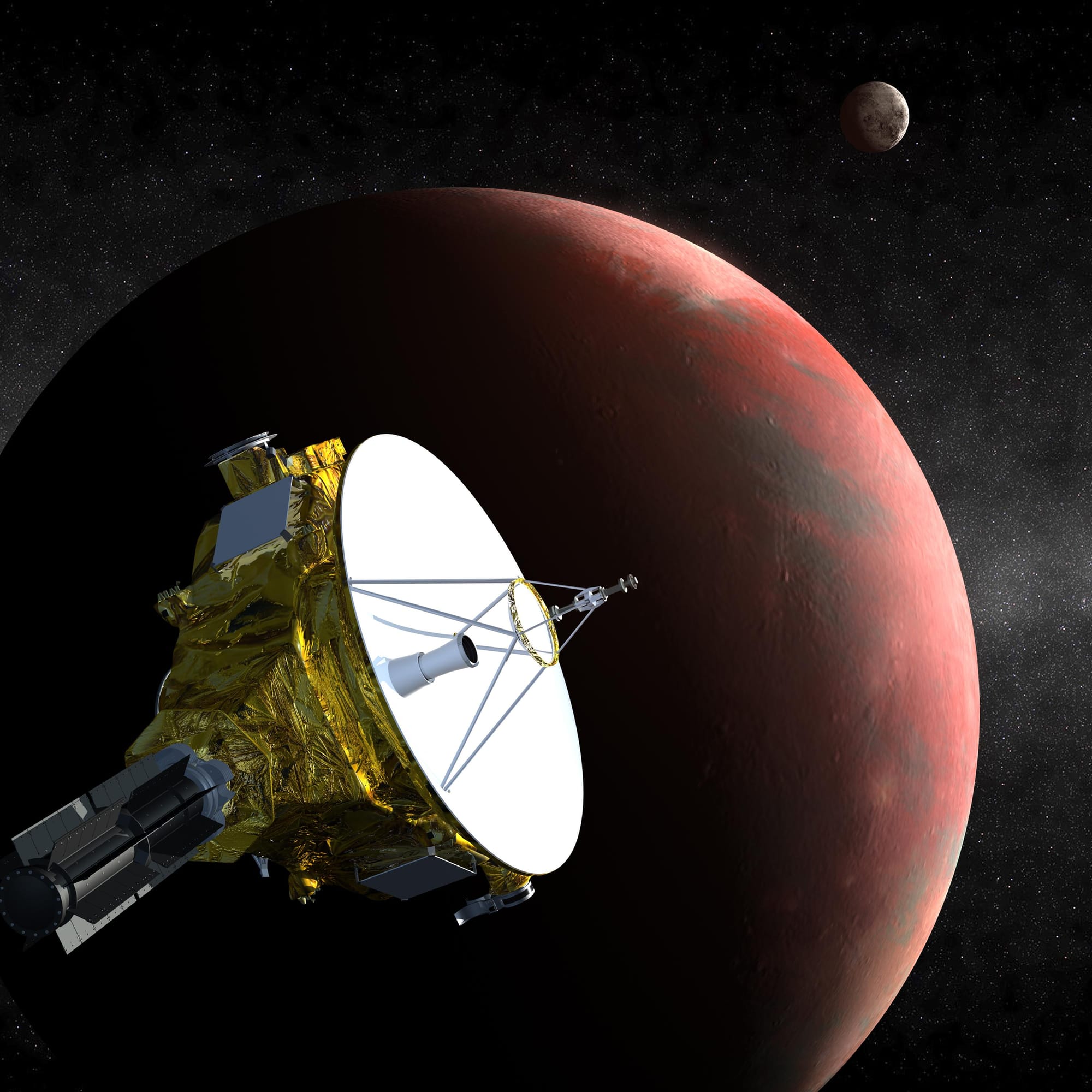
Passing about 18,000 miles (29,000 km) away from Charon on the 24th of July 2015, New Horizons gave the world a brand new stunning view of the moon from up close. At its closest point it was 7,800 miles (12,500 km) from Pluto, mapping both the planet and the moon using its long range imaging cameras. It mapped them to a resolution of 25 mi (40 km). The way they entered the system and the speed they were going allowed them to map all sides of both bodies. They took multiple images with the close range camera to find any surface changes. They also characterised the atmosphere, using the on board ALICE experiment.
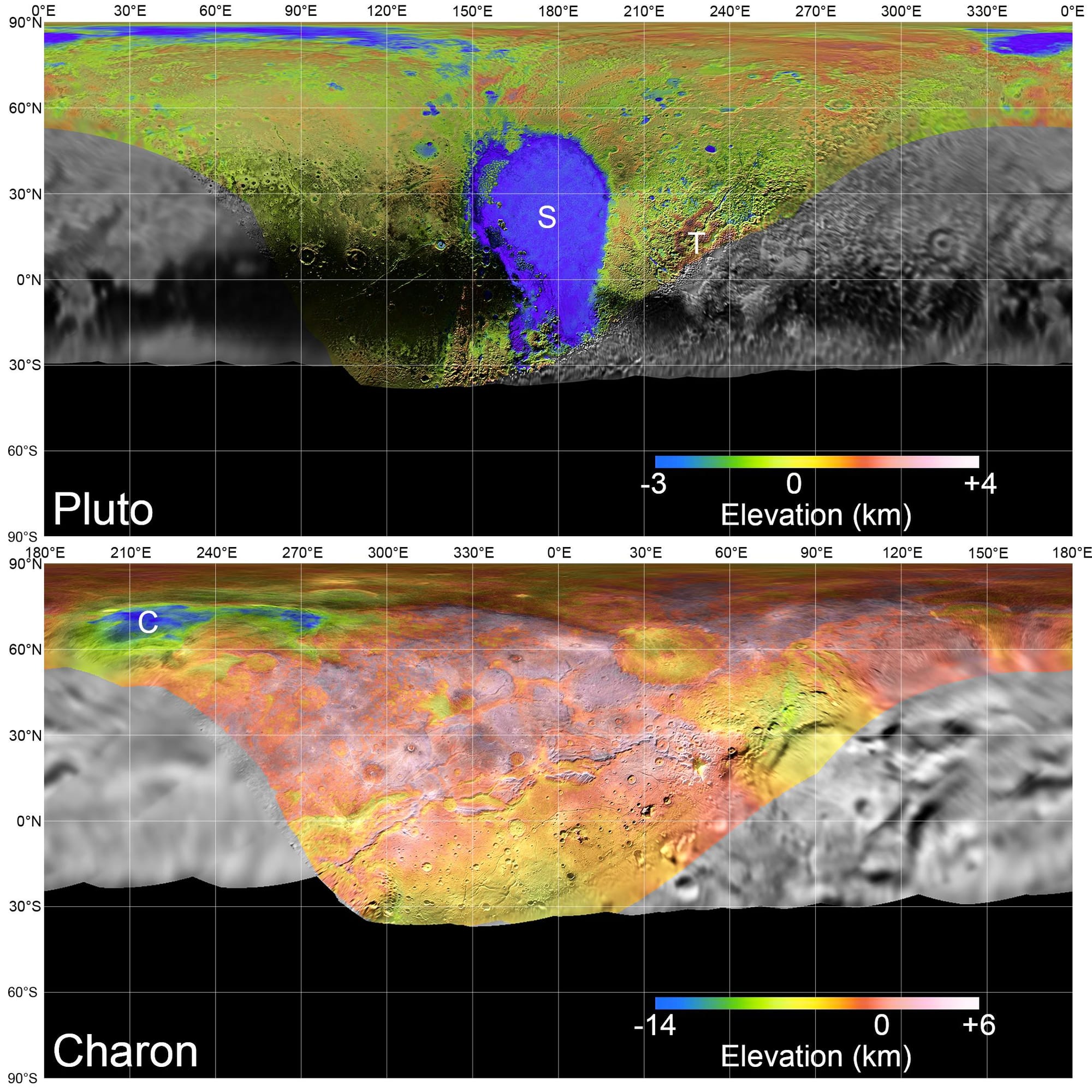
The science gained by New Horizons has given astronomers a new look into the outer reaches of the solar system, and it is still planning to take more images of comets and asteroids it comes into contact with in 2019. The first close up images of Charon were revealed to the world at the John Hopkins Applied Physics Lab in Maryland to a packet auditorium. Jim Christy, the discoverer of Charon and his wife who it was named after were there at the unveiling, were recognized by the crowd. He said “When you go from this little blur in which you don’t actually see anything, to the enormous detail New Horizons sent back,” Christy said, “it’s incredible.” That amount of change in just 40 years.

Who am I?
Im Ryan, an engineer with an interest in wildlife, electronics and many other things. Get in touch if you want to discuss. Follow for more content if you enjoy it. For now, enjoy this image of a frog I found hiding in a little hole in an Oxfordshire Churchyard.